
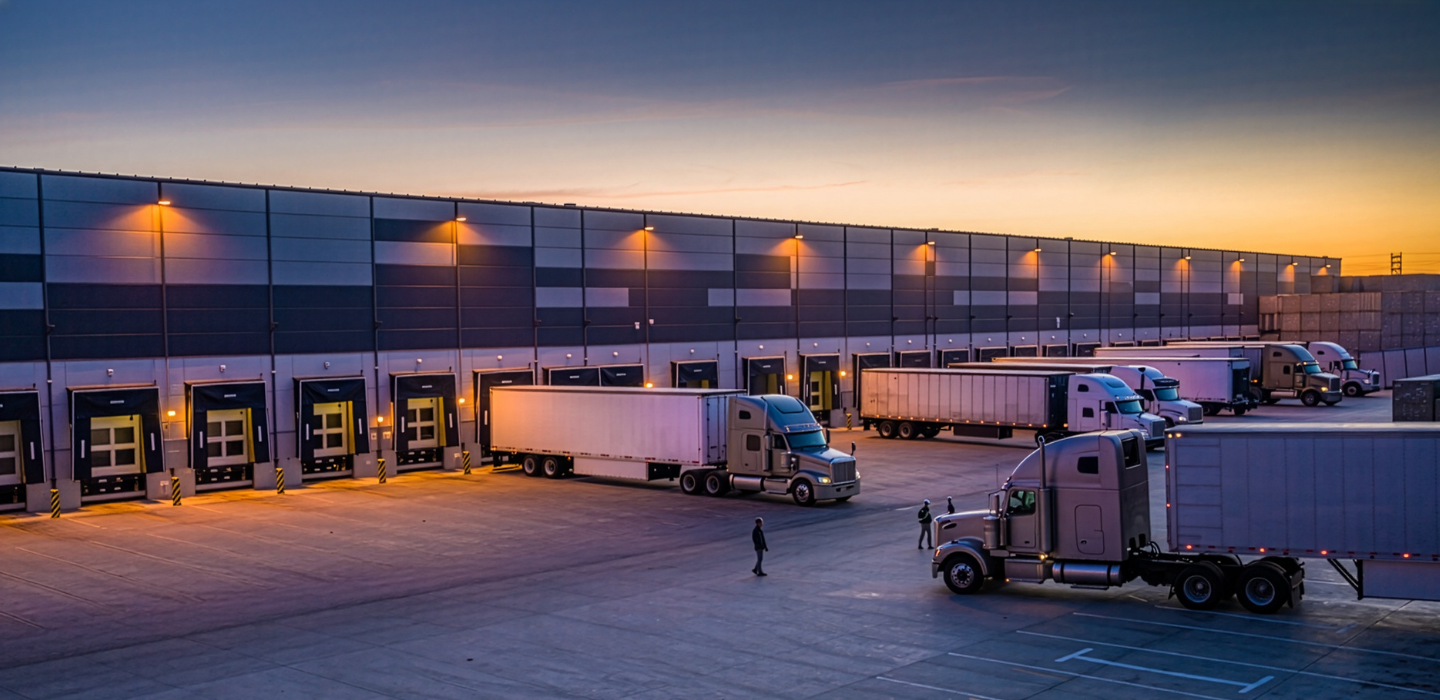
Most operations have the data. What they lack is one place where it connects, updates in real time, and drives action.
Talk to Our Team»
What It Actually Means
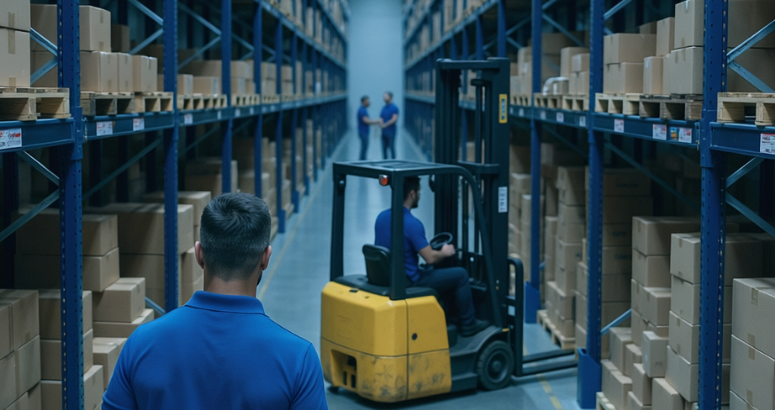
The term gets used loosely. Vendors call dashboards visibility. Carriers call tracking portals visibility. None of those are what an operations leader actually needs. Real supply chain visibility means knowing what is happening across your full operation, not just one function, at the same time, with enough context to act on it.
Supply chain visibility is not a feature. It is the outcome of connecting the right data, from the right systems, in the right context, for the right person at the right time.
»
The Problem
Data Trapped in Silos
Your WMS, TMS, ERP, and carrier portals all know something. None were built to share it in real time. A complete picture requires manual assembly from multiple places — and by then it is already out of date.
Visibility Tools That Don't Connect
Most BI tools and dashboards deliver backward-looking reporting. Useful for trend analysis. Not useful for the DC supervisor who needs to know right now whether an inbound load has what they need for tomorrow's orders.
Point Solutions That Create New Gaps
Adding a standalone visibility tool creates an integration problem. The cost and complexity often exceeds the benefit, and the data in the visibility platform is always slightly behind reality.
Visibility Without Context
Seeing that inbound fill rate is 87% is information. Understanding which vendors are driving the shortfall, which DCs are affected, and the downstream impact on this week's fulfillment plan — that is visibility.
»
How We Deliver It
Vantage 9 is not a BI tool or a reporting platform. It is a custom-built execution layer that sits on top of your existing systems, connects to them in real time, and surfaces a unified operational view configured around the decisions your team actually makes.
We start by connecting to your existing systems — WMS, TMS, ERP, carrier feeds, yard management tools, and any other operational data source your team depends on. No rip and replace. No data migration. Your systems of record stay exactly where they are.
Connected data is structured into a single operational layer that normalizes across systems, resolves conflicts, and creates the clean, unified data foundation that real-time visibility requires. This is the step most visibility tools skip. It is also why they fail.
A unified data layer is still not visibility until the right information reaches the right person in the right context. Vantage 9 surfaces configurable views, alerts, and exception workflows designed around the roles and decisions that matter most in your operation.
»
Beyond Visibility
A unified operational view is what makes the next thing possible. Seeing every inbound shipment, every order at risk, every carrier behind schedule is necessary — but it is not enough. Operations leaders are not drowning because they cannot see what is wrong. They are drowning because seeing it does not mean it gets handled.
Vantage 9's AI is built into the visibility layer, designed to act on what gets surfaced. Where exceptions follow patterns, the AI handles them directly: rerouting orders, reassigning carriers, rebalancing inventory across nodes. Where the situation needs judgment, it routes to the right person with full context. Visibility becomes the trigger for action, not just the report on what action is needed.
Most visibility platforms tell you what's wrong. Vantage 9 is built to do something about it.
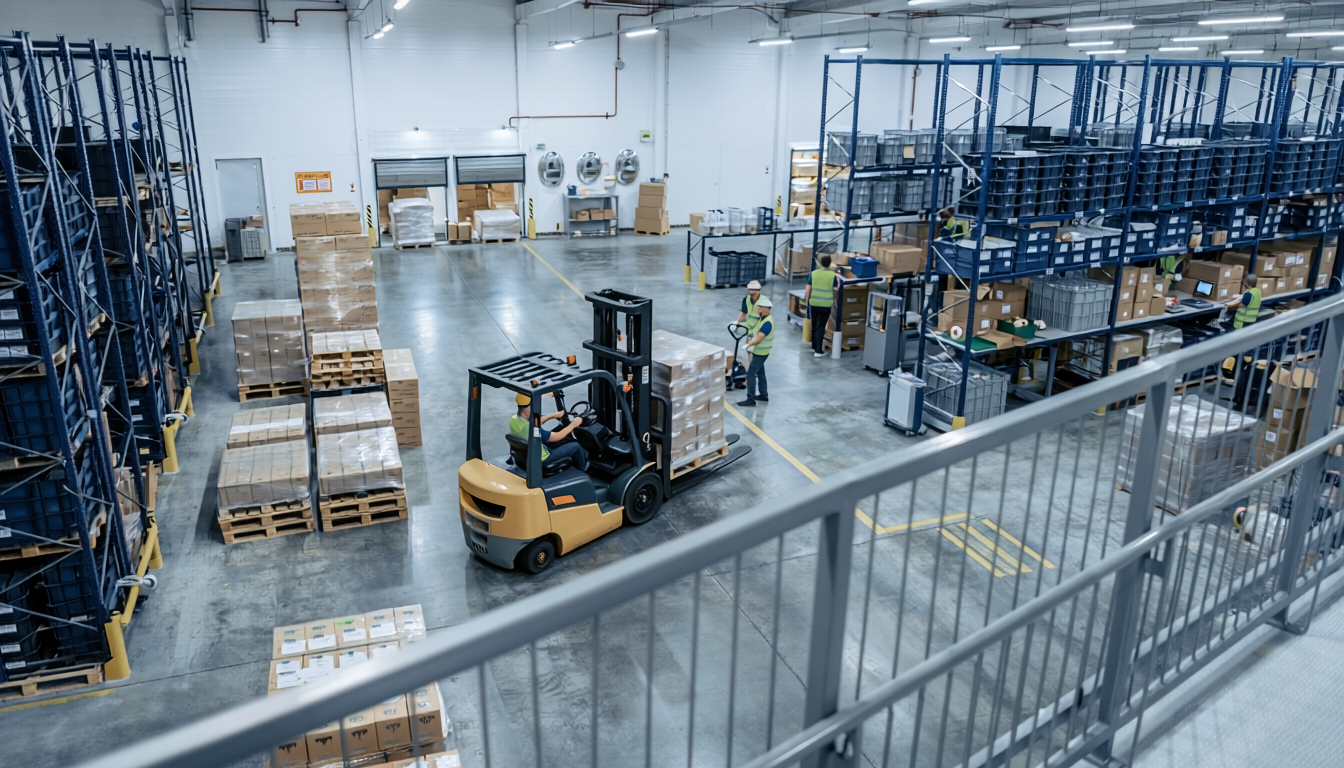
Inventory positions across every node in your network, updated as activity happens.
Warehouse, transportation, inventory, and yard visible together in a single operational layer.
Exception alerts before problems reach the customer, with full context for whoever handles them.
To your existing systems without replacing them. Your systems of record stay exactly where they are.
»
Coverage
Vantage 9 connects your operational domains into a single visibility layer. Each domain can be configured independently or deployed together as an integrated platform.
»
Warehouse
// Warehouse Visibility
The Challenge
Your WMS shows you what is in the warehouse and where it is located, but it does not show you what is arriving, what is at risk from inbound exceptions, or how warehouse activity connects to the rest of your operation.
What Becomes Possible
Vantage 9 connects warehouse activity — receiving, putaway, inventory positions, dock scheduling, and exception events — to your full operational view. A late inbound shipment surfaces before the DC schedule is affected. A receiving discrepancy triggers an alert before it becomes an inventory accuracy problem.
»
Inventory
// Inventory Visibility
The Challenge
Your ERP and WMS both track inventory, but they track different things, in different formats, at different cadences. Getting an accurate, network-wide inventory picture requires manual reconciliation that is always slightly behind reality.
What Becomes Possible
Vantage 9 unifies inventory data across your ERP, WMS, carrier feeds, and any other inventory data source into one accurate, real-time network view. On-hand, in-transit, and on-order positions are visible together so your planning and operations teams always work from the same picture.
»
Transportation
// Transportation Visibility
The Challenge
Shipment tracking is not supply chain visibility. Knowing where a shipment is tells you very little unless you also know what it affects: which orders it supports, which DCs it is heading to, and what happens downstream if it is late.
What Becomes Possible
Vantage 9 connects transportation data — carrier feeds, shipment status, ETA, freight cost, and exception events — to the inventory and order context that makes that data actionable. Your team sees delays before they become failures and can act on them before they reach the customer.
»
Yard
// Yard Visibility
The Challenge
The yard is the last blind spot in most supply chain visibility deployments. Trailers arrive, sit, move, and depart, and most of that activity is invisible to any system until someone manually enters it.
What Becomes Possible
Vantage 9 connects yard activity — trailer locations, gate processing, dock assignments, dwell times, and yard truck movements — to the inbound schedule and warehouse receiving workflows. Your DC team always knows what is on the yard, where it is, and what needs to happen next.
A global manufacturer was processing one trailer per dock per shift before Vantage 9. After connecting their yard, dock scheduling, and warehouse receiving into a unified view, each dock processed eight trailers per shift. The bottleneck was not capacity. It was visibility.
»
Custom vs. Generic
Most supply chain visibility platforms are horizontal — built to serve a broad range of industries and operation types. They require significant configuration to fit your specific operation and leave gaps where your operational reality does not match their standard data model.
Vantage 9 builds a custom visibility layer configured around your specific systems, your data structure, your operational roles, and the decisions your team actually needs to make. The result is visibility that fits your operation rather than an operation you have shaped to fit a platform.
Integration Approach
Built for your exact tech stack
ERP, WMS, TMS, carrier feeds, and any other source system your operation runs — connected directly, not through standard connectors that require additional scope and cost.
Generic platforms: Standard connectors to common systems; custom integrations require additional scope and cost.
Data Model
Your data structure, not ours
Custom data layer built around your systems, your data structure, and your operational reality. Your operation does not conform to a platform — the platform conforms to your operation.
Generic platforms: Standardized model designed for broad applicability; your operation conforms to the platform.
Views and Alerts
Designed for your roles and workflows
Every view and alert is designed for your specific roles, your specific workflows, and the decisions your team actually makes — not configured within the limits of a standard dashboard template.
Generic platforms: Configurable within the platform's template; standard dashboards cover most use cases.
Deployment Timeline
90 days to initial value
Phased rollout adds capability as the operation matures. Measurable ROI in the first year — not at the end of a multi-year implementation project.
Generic platforms: 6-18 months depending on integration complexity and configuration scope.
Source System Impact
Read-only. Your systems stay yours.
Vantage 9 never writes to your source systems. Your ERP, WMS, and TMS remain your systems of record. No compliance risk, no shadow systems, no disruption to existing workflows.
Generic platforms: Some platforms write back or require agent installation on source systems.
When a Problem Is Surfaced
AI built to act, not just alert
Vantage 9's AI is built to act on common problems directly — escalating to a human only when the situation calls for judgment. Visibility without action is just a better dashboard.
Generic platforms: The platform alerts a human and waits for that human to take action in a separate system.
»
Who It's For
Visibility is a cross-functional need. It speaks to the leaders accountable for operational performance across the full supply chain.
VP of Supply Chain or Logistics
Needs a view that crosses warehouse, transportation, and inventory without manual assembly. Currently gets it from weekly reports that are always a day behind.
Director of Operations
Spends significant time pulling information from multiple systems. Needs exceptions to surface proactively rather than reactively.
VP of Transportation or Freight
Managing carrier performance across dozens of carriers. Needs transportation data connected to its operational impact on the warehouse and inventory position.
CFO or VP Finance
Supply chain exceptions create unplanned cost. Needs the operational context to understand where those costs are being created and how to reduce them.
»
Integration
Vantage 9 does not require you to replace your existing systems to achieve supply chain visibility. It connects to them.
If you are running SAP or Oracle for ERP, a WMS from Manhattan or Blue Yonder, a TMS from MercuryGate or Oracle, and carrier feeds from your logistics partners, Vantage 9 connects to all of them. The integrations are built for your specific tech stack and maintained as your systems evolve. Your existing investments are preserved. The visibility layer sits on top of them and makes all of them more useful.
ERP (SAP, Oracle, NetSuite)
Inventory, order, and financial data in the unified operational view
Vantage 9 pulls inventory, order, and financial data from your ERP into the unified operational view, connecting ERP records to real-time operational activity without requiring ERP configuration changes.
Financial and operational master data, order management, procurement.
WMS (any)
Warehouse data always part of the unified operational picture
Warehouse data is connected to the broader visibility layer so on-hand positions, receiving activity, and fulfillment events are always part of the unified operational picture.
Warehouse execution, inventory positions, receiving and fulfillment.
TMS (any)
Cross-functional context for every transportation event
Shipment data, carrier performance, ETA, and freight cost connect to the operational view alongside warehouse and inventory data, giving your team cross-functional context for every transportation event.
Transportation planning, execution, carrier management, freight audit.
Carrier Data Feeds
Shipment visibility always current, not dependent on portal check-ins
Direct carrier feeds and third-party tracking data connect alongside TMS data, ensuring your shipment visibility is always current rather than dependent on carrier portal check-ins.
Real-time shipment tracking, ETA, and delivery confirmation.
Yard Management (any)
Complete operational picture from gate to floor
Yard activity connects to inbound scheduling and warehouse receiving workflows, completing the operational picture from gate to floor.
Trailer locations, gate events, dock appointments, yard truck activity.
OMS / Order Management
See which orders are at risk before the customer knows
Order data connects to inventory, transportation, and warehouse activity so your team can see which orders are at risk before the customer knows there is a problem.
Customer orders, fulfillment commitments, SLA tracking.
»
Ready to See Your Full Operation in One View?